Section 04 / Family Safety
Family safety tips and a home safety guide for every room
These home safety tips for families cover one everyone can actually remember when it matters: not a long list nobody reviews until it's too late. Here's what's worth setting up once and practicing occasionally.
In this guide
The Essentials
Family safety tips, explained in one short guide
Family safety tips only help if they're short enough to remember, so this family safety guide sticks to routines that take minutes to set up and seconds to recall under stress: not a long manual nobody opens twice. Every item below works as its own small entry, usable without reading the rest.
Plan together
A meeting spot and an out-of-area contact, decided in advance.
Teach calmly
A short, calm script, not a detailed explanation of what could go wrong.
Cover everyone
Kids, pets and older relatives all get their own piece of the plan.
These family safety tips work alongside the home safety tips for families covered throughout this family safety guide: read them as one set of habits, not two separate checklists.
A family meeting point, decided in advance
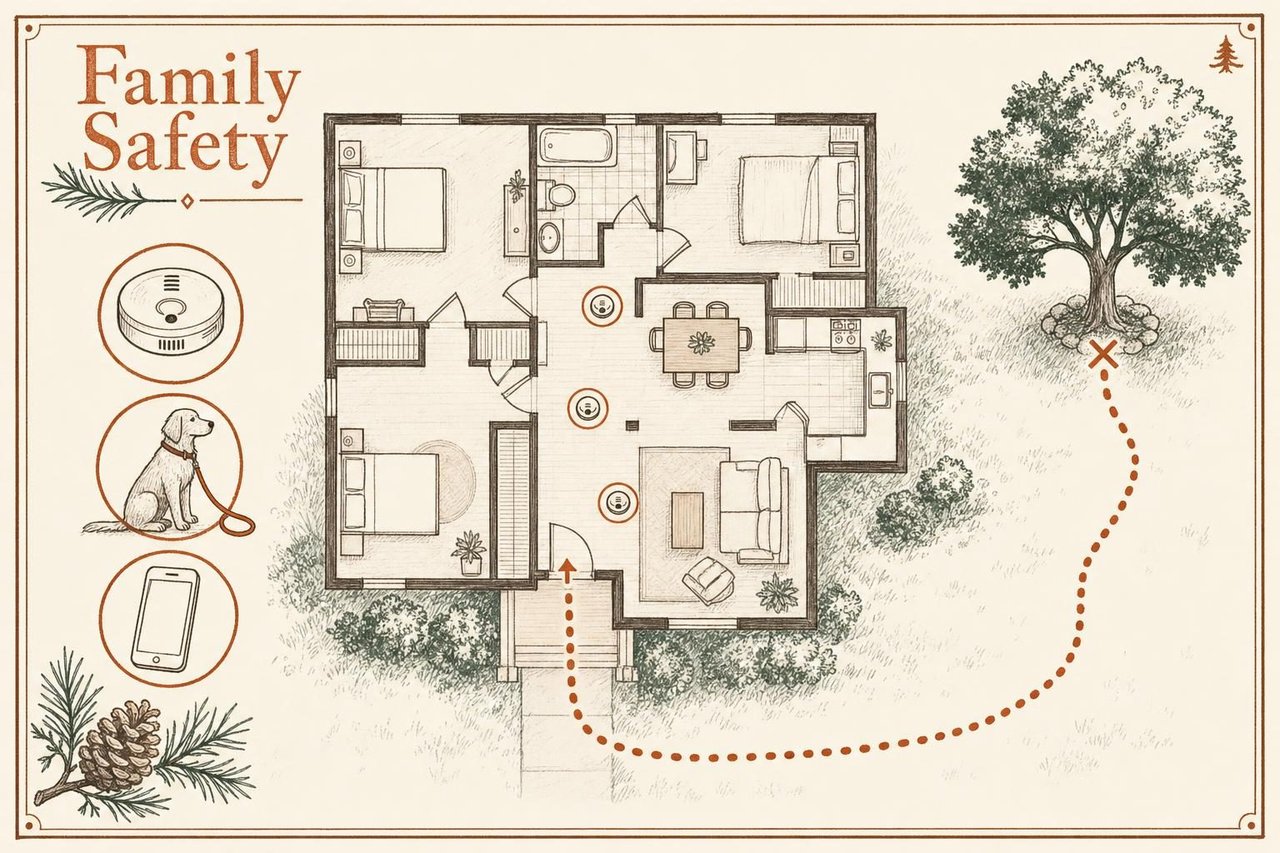
Of all the family safety tips in this guide, this is the one worth setting up first. If a fire, a gas leak, or any other reason to leave the house quickly happens, the question "where do we meet" should already have an answer. Pick two spots: one right outside the home (a specific tree or mailbox, not just "outside") for a fast exit, and a second spot further away (a neighbor's driveway or a nearby landmark) in case the street itself isn't safe to stand on. Walk both routes with kids at least once so the spot is a real memory, not just an instruction.
An out-of-area contact for kids
During a widespread local emergency, phone networks can get congested faster for local calls than for long-distance ones. Many preparedness guides recommend picking a single relative or family friend who lives out of the immediate area as a check-in contact. Everyone in the household calls or texts that one person if they get separated, rather than trying to reach each other directly. Make sure kids old enough to use a phone know the number by heart, not just saved in a phone that might be lost or dead.
Once you've decided on both, turn them into something durable with our family emergency communication plan builder. It builds a one-page plan you can print and post somewhere everyone will actually see it.
Gaps worth closing early.
A plan nobody has walked through
Discussing a meeting spot once isn't the same as everyone having physically walked there. A plan that's only ever discussed, never walked through, tends to fall apart the one time it's needed.
Pets as an afterthought
Many emergency shelters either can't accept pets or require proof of vaccination and a carrier on arrival: worth sorting out before an emergency, not during one.
Assuming kids already understand the alerts
A short, calm script a child can repeat is more useful than a detailed explanation. Walking through the difference between a watch and a warning once, in plain terms, is usually enough.
Different members. Different needs.

Teaching kids the basics without scaring them
The goal with younger kids is a short, calm script they can repeat: "If you hear the smoke alarm, go to [meeting spot]." For older kids, walking through the difference between a watch and a warning once is usually enough.
See the glossary ↗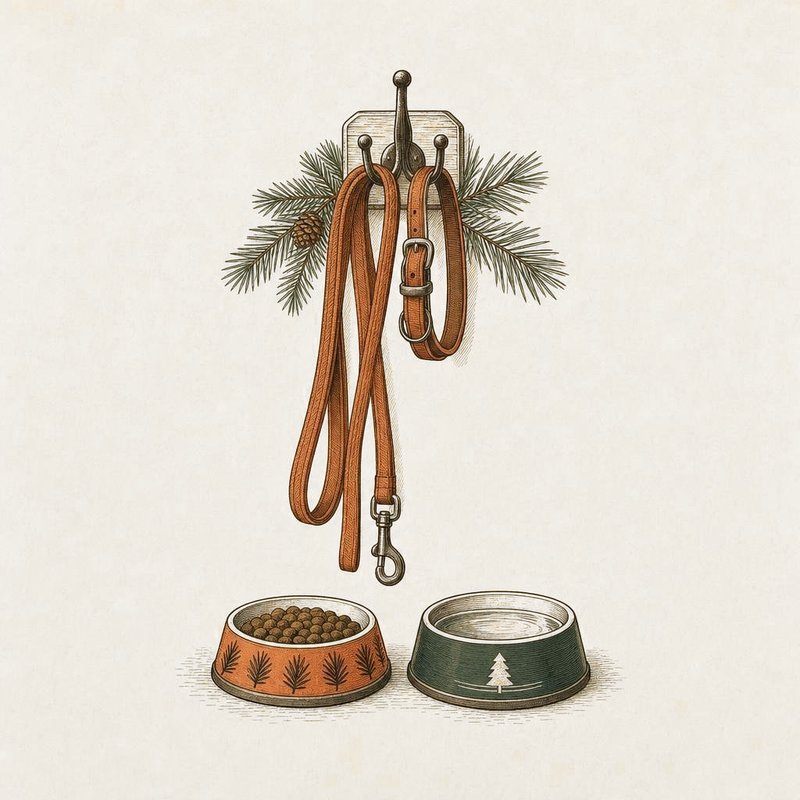
Keeping pets part of the plan, not an afterthought
Keep a leash, a carrier, and a few days of food near wherever you'd grab an emergency kit, and know in advance which nearby shelters are pet-friendly.
Add pets to your kit ↗
Checking in on older relatives
A short conversation about their own evacuation plan is worth having before anything happens: whether they can physically get out quickly, and who they'd call if they couldn't.
See emergency preparedness ↗
Babysitters and other short-term caregivers
Anyone watching the kids for an evening needs a condensed version of the plan: the meeting spot, where supplies are kept, which neighbor to knock on, and the one number to call first.
See home security basics ↗Childproofing, room by room
A generic childproofing list buries the few items that matter for your home inside dozens that don't apply. Our childproofing checklist tool asks your child's age and which features your home actually has (stairs, a pool, a fireplace) and only shows the categories that are relevant, organized room by room.
Home fire safety, specifically
Smoke alarms are the single most important item in home fire safety, and the maintenance routine matters more than people expect: test each alarm monthly, replace batteries at least once a year (tying it to a clock change is an easy way to remember), and replace the whole unit roughly every ten years, since the sensors themselves degrade over time even with fresh batteries. A carbon monoxide detector belongs on every level of the home, especially near sleeping areas.
If your home has more than one story, a fire escape ladder stored in an upstairs bedroom closet is worth the modest cost — it's one of the few pieces of equipment that's genuinely useless to buy during an emergency and genuinely useful to have bought in advance.
A basic home security routine, even without a monitored system
Not every household needs (or wants) a monitored security system to meaningfully reduce risk. Exterior lighting on a timer or motion sensor, visible deadbolts on every exterior door, and a habit of locking up even for short errands account for a large share of the difference between homes that are targeted and homes that aren't. If you do want to go further, our security devices section compares monitored systems on the terms that actually matter for a family household.
A note on smoke alarm placement
Beyond simply having smoke alarms, placement affects how quickly they actually wake someone. Standard guidance calls for one inside every bedroom, one outside each sleeping area, and at least one on every level of the home, including the basement. Because smoke rises, alarms belong on ceilings or high on walls rather than near floor level, and should be kept a reasonable distance from kitchen appliances.
Car and travel basics worth setting up once
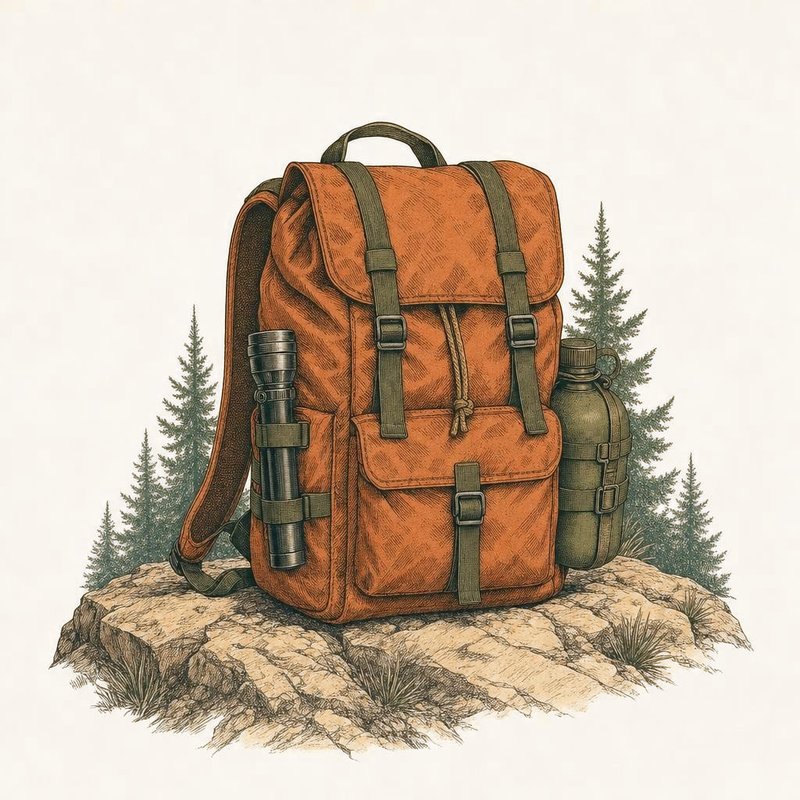
A small kit in the car (water, a flashlight, a basic first-aid kit, a phone charger that doesn't depend on the car battery) covers a surprising share of ordinary travel problems. If your family travels through areas with inconsistent cell coverage, agreeing on a specific check-in time makes it much easier to tell the difference between "running late" and "something's actually wrong."
Digital safety fits the same pattern
The same principle that works for physical safety (a short, memorable routine beats a long list nobody follows) applies just as well to kids and screens. A single agreed rule sticks better than a long list of restrictions, and revisiting it briefly every year or so as kids get older keeps it relevant.
Water safety, briefly
For households with a pool, a pond, or regular access to open water, a few habits do most of the work: constant, undistracted adult supervision during any swimming, clear rules about swimming alone, and swim lessons started as early as a pediatrician recommends. A pool fence with a self-latching gate is one of the few pieces of physical equipment here that meaningfully reduces risk on its own.
Keeping a current photo of each family member
A recent, clear photo of each child and any pet (on a phone and printed as a backup) is one of the simplest things to have ready and one of the most useful if a description is ever needed quickly.
Keeping emergency contacts somewhere they'll actually be found
A phone full of contacts is useless if the phone is dead, lost, or in someone else's hands in an emergency. A simple printed card with the out-of-area contact, the family doctor, and one or two neighbors (kept in a wallet, a backpack, and posted at home) covers the realistic failure case far better than a contact list saved only in an app.
Make safety a routine, not a one-time project.
A plan built for a five-year-old needs real updates by the time that child is eleven. Revisiting the plan at a natural yearly marker keeps it from quietly going stale while everyone assumes it still applies.
Walk the plan together
Practice twice a year
Revisit as kids grow